
Armstrong Siddeley Heritage Trust
Siddeley Puma
The Puma was the first aero-engine to carry the Siddeley name; it was derived from the failing Beardmore BHP/Galloway Adriatic engine, which the War Office had assumed would give the Royal Flying Corps air superiority. Siddeley-Deasy were asked to take responsibility for getting the engine into volume production.
John Siddeley agreed, provided they were allowed to improve the engine.


Improvements to the engine included replacing the cast-iron cylinder heads with aluminium and the steel water jackets with detachable aluminium units. There were further issues with the porosity of aluminium cylinder castings, which were overcome by using sleeve liners that were shrunk and screwed into the head.
Within months, the engine entered full production, with deliveries peaking at 250 units per week. By the end of 1918, 4,288 had been delivered, making it the most numerous British engine of WWI.

Siddeley Puma portside view

Siddeley Puma cylinder block

Siddeley Puma starboard view

Whilst the engine was fitted to many aircraft, its principal use was with the Airco DH9 bomber, with 4,091 being built.

Siddeley Puma installed in a DH 9

DH 9 in flight credit The Historic Aircraft Colection

Close up of Siddeley Puma in a DH 9


Siddeley Puma powered DH 9's on active service during WWI. The RH image would appear to be in the livery of the Dutch Army Airforce.

The Siddeley Puma engine continued to be produced after the end of World War I; many were exported, and Puma engines were fitted to planes produced by 20 different countries. Many DH9 Puma-engined aircraft were converted for civilian use by commercial airlines such as KLM.
One notable post-war achievement was the first single-engined aircraft to fly to Australia from England, a Puma-engined DH 9, which took off from Hounslow, near London, piloted by Flt Lt Ray Parer and Major John McIntosh. They had intended to take part in the 1919 England to Australia flight, also known as The Great Air Race, but technical issues delayed them. They took off one month after the winning entry, a twin-engined Vickers Vimy, had landed at Darwin; nonetheless, they intended to show that the journey could be completed in a single engined aeroplane.
During the journey, they flew over Mt Vesuvius, where billowing hot air caused them to drop 600ft in a few Seconds. Their machine twice caught fire in Syria, where they had to fight off hostile Arabs. The pair took nearly seven months to complete their journey. Having succeeded against all expectations, they both received a hero’s welcome and were awarded consolation prizes of £500 each.
Theirs had been the first flight to reach Australia in a single-engine aircraft. And, symbolically at least, they also transported the first airfreight from England, a carefully stowed bottle of whisky from the DH9’s sponsor, Scottish distilling baron Peter Dawson, whose initials can be seen on the side of the aeroplane in the attached photos.


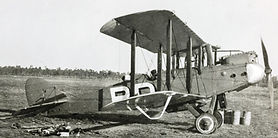
Images of the Siddeley Puma installed in the DH 9 that made the historic London to Australia flight, together with a map showing the route and landing locations. For best results, enlarge the map by clicking on it.
Double Puma.
One unusual development of this engine was a Pair of Pumas mounted in tandem, with one unit acting as a tractor engine and the other as a pusher. This engine was developed for the Bristol Braemar I prototype bomber, which was powered by a pair of Pumas; the aircraft didn't enter production.


Bristol Braemar MkI fitted with twin double Puma Engines credit AirHistorNet
In 1919, Siddeley-Deasy was acquired by Armstrong Whitworth, and the company was renamed Armstrong Siddeley, who continued to develop the Puma for civilian aircraft. Two additional developments of the Puma engine were the Pacific and the Tiger:
The Pacific engine combined two banks of cylinders from the Siddeley Puma mounted on a single crankshaft, resulting in a V12 configuration with a theoretical output of 500 hp (370 kW). Unfortunately, its fate remains unknown.
The Tiger was a Pacific, with the blocks bored out to produce 600 hp (447 kW). A pair of Tiger engines were installed in the Siddeley-Deasy Sinaia aircraft. However, the aircraft was made too late in World War I to enter production.
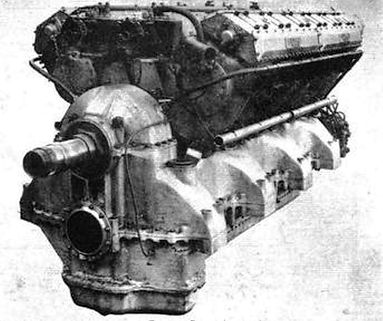

Front View Siddeley Tiger Aero-Engine (1918) Rear View

Siddeley-Deasy Sinaia Twin Engined Bomber
.jpg)
COPYRIGHT 2025
Please note that the information contained on this website has been collated from a variety of sources, many of which are in the public domain, and therefore we claim no copyright in this site. We have acknowledged the sources used and, where possible, attributed copyright where we are aware of it. However, if you feel that we have infringed on any specific copyright, please let the web master know, and appropriate action will be taken.
Many thanks. EMAIL: heritage@siddeley.org