
Armstrong Siddeley Heritage Trust
Armstrong Siddeley Cheetah Aero-Engine
The Armstrong Siddeley Cheetah was a seven-cylinder air-cooled, single-row radial aero-engine of 13.66 litres (833.77 cc). The Cheetah was a development of the Armstrong Siddeley Lynx engine, using the increased bore cylinders from the Armstrong Siddeley Panther engine, whilst retaining the Lynx's stroke; it was initially known as the Lynx Major.
At first, only direct-drive engines were produced, but later versions featured propeller-reduction gears of various ratios. All the early versions were normally aspirated, while later models were supercharged, either geared or directly driven by the crankshaft.
First introduced in 1935, it continued production through 1948, when over 37,200 were produced. It was an extremely reliable engine and, as such, the first of its type to be certified for 1,200 hours of operational time between overhauls.
Images of the Armstrong Siddeley Cheetah Aero-Engine
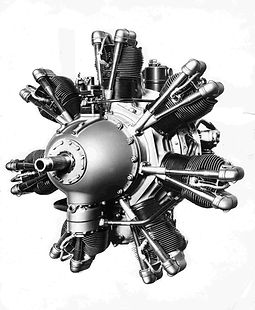
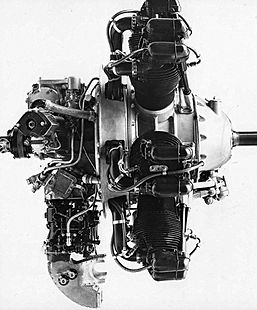
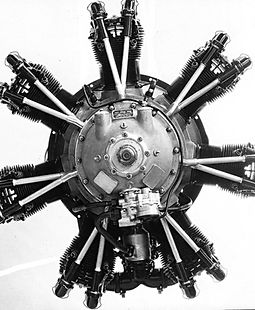


Images of Aircraft Powered by Armstrong Siddeley Cheetah Aero-Engines

Avro Anson Mk1 Cheetah VIA

Airspeed Viceroy Cheetah VIA

Avro Anson T20 Cheetah XV

Airspeed Envoy Cheetah VI

Engine detail showing oil cooler

Cheetah engine on the assembly line
Leading Particulars of Cheetah Engines
Engine Type 7-cylinder, single-row air-cooled, radial aero-engine
Size Bore/Stroke 5.25 x 5.5 inch. (133.35 x139.7 mm). Volume 833.77 cu. in. (13.66 litre)
Variants
MK V
1935 270 hp (198.5 kW) Direct Drive, Plain Fan
Mk VA
1935 285 hp (209.6 kW) Medium Supercharged
Mk VI
1935 307 hp (225.8 kW) Medium Supercharged
Mk IX
1937 310 hp (228 kW) Medium Supercharged
Mk X
1937 360 hp (264.8 kW) Medium Supercharged
Fitted with an electric or hand starter and a variable pitch propeller
Mk XI
415 hp (305 kW) A geared version of the Mk X with the stroke reduced from 5.5 to 5 inches
Mk XII
As Mk XI adapted for radio-controlled target craft, it had its ignition screened to prevent interference
Mk XV
420 hp (308.9 kW) Medium Supercharged
The stroke reverted to 5.5 inches. Geared epicyclic with fixed-pitch or constant-speed feathering proplers
Mk XIII
As XV but with a carburettor modified for Aerobatics
Mk XIX
As IX with modifications to improve performance
Mk 25
1943/4 385 hp (283 kW) as XV with a modified constant-speed unit. Specifically developed for the Argentine
I. Ae.D1 22C aircraft
Mk 26
As Mk 25 with automatic boost and mixture controls
MK 27
As Mk 25 with an automatic single lever carburetter


