
Armstrong Siddeley Heritage Trust
Armstrong Siddeley Panther Aero-Engines
Panther
By 1929, the Jaguar engine was underpowered compared to the competition. To address this situation, the engine's bore was increased to 5.25 inches, which raised the displacement to 27.3 litres. The prototype was known as the Jaguar Major, whilst all production units were named as Panthers.
The Panther variants were available as geared or ungeared units, with aspiration options including a plain fan, a geared fan that provided a mild supercharging effect, and a full supercharger.

Panther Mk IV
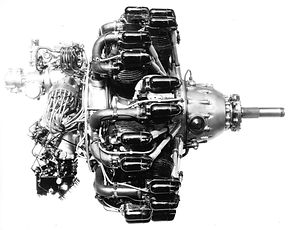
Panther Mk X

Panther Mk XIA
Some examples of Panther powered aircraft are shown below.

AW Starling Panther IIA

Avro_627 Panther IIA Credit Tim Mason
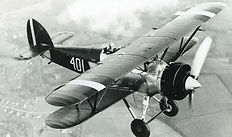
Hawker Fury Panther IIIA

Supermarine Air Yacht Panther IIA engines

AW XVI Panther III
Fairey Gordon Panther IIA Credit IWM

Leading Particulars of Panther Engines
Engine Type 14-cylinder, two-row air-cooled, radial aero-engine
Bore 5.25 inch (133.4mm)
Stroke 5.50 inch (139.7mm)
Volume 1666 cu. in. (27.3 litre)
Tractor Drive Geared Epicyclic
Variants
Jaguar Major Mk I, 1929 prototype of the Panther engine
MK II
1929 605hp (445kW), Plain Fan, Compression ratio 5:1
Mk IIA
1930 605hp (445kW), Geared Fan, Compression ratio 5:1
Mk III
1931 560hp (412kW), Supercharged, Compression ratio 5:1
Mk IIIA
1931 502hp (369kW), Supercharged, Compression ratio 5:1
Mk VI
1930 560hp (212kW), Geared Fan, Compression ratio 5.2:1
Mk VIA
1932 560hp (412kW), Geared Fan, Compression ratio 5.2:1
Mk VII
1934 565hp (416kW), Supercharged.Compression ratio 5.1:1
Mk IXA
1934 580hp (427kW), Geared Fan.Compression ratio 6.35:1
Mk X
1934 700hp (515kW), Geared Fan.Compression ratio 6.35:1
Mk XI
1936 600hp (441kW), Geared Fan.Compression ratio 6.35:1
Note: The plain fan had no supercharging effect; the geared fan gave a mild supercharging effect.

AW Scimitar Panther VII Credit Redit

Westland Wapiti Panther II Credit SAAF
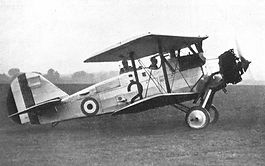
AW Atlas Panther IIA

Panther IV
Panther IV


Panther IV

Peruvian Air Corps Farey Seal Panther IIA

Finish Air Force Blackburn Ripon Panther IIA
Power Curve for a Panther IIA
Power curve rated at 3000ft from A. & A.A.E Martlesham, Report M617 dated 24.1.1933. Boost rated -.625 lb/sq. in.
RPM 2,300 2,200 2,100 2,000 1,900 1,800
BHP 605 579 554 529 501 469
BOOST zero -.625 lb