
Armstrong Siddeley Heritage Trust
Armstrong Siddeley Tiger Aero-Engines
This page is under development
The final evolution in the Jaguar series was the Tiger. Based on the Armstrong Siddeley Panther, it had a bore of 5.5 inches with a stroke of 6 inches, giving a swept volume of 32.7 litres. The engine's power ranged from 570hp in the MkI version through to 860hp in the MkVIII. Armstrong Siddeley had previously used the Tiger name in 1918 for a V12 aero-engine
The MkIII Tiger was the first aircraft in the world to be fitted with a two-stage supercharger, an Armstrong Siddeley patented device.


Armstrong Siddeley Tiger Aero-Engine
Some examples of Tiger powered aircraft are shown below.

AW Ensign Tiger IXC engines

Blackburn Shark Tiger IV & VI

AW Whitley Credit World War Photos


AW Whitley's under construction at the Bagington factory and undergoing routine maintenance at an RAF station


Armstrong Whitworth Ensign powered by Tiger IXC in flight and unloading passengers at Croydon Aerodrome
Leading Particulars of Tiger Engines
Engine Type 14-cylinder, two-row air-cooled, radial aero-engine
Bore 5.5 inch (127 mm)
Stroke 6.0 inch (140 mm)
Volume 1996 cu. in. (32.7litre)
Tractor Drive Geared Epicyclic
Production Variants
Mk I,
1932 570hp (419kW), Medium Supercharged, Compression ratio 5.2:1
MK III
1933 610hp (455kW), Medium Supercharged, Compression ratio 5.35:1
Mk IV
1934 720hp (530kW), Medium Supercharged, Compression ratio 5.35:1
Mk VI
1936 760hp (589kW), Medium Supercharged, Compression ratio 6.25:1
Mk VIC
No details known
Mk VIII
1936 860hp (633kW), Two-speed Supercharger, Compression ratio 6.2:1
Mk IX
1936 810hp (596kW), Medium Supercharged, Compression ratio 6.2:1
Mk IXC
1938 805hp (592kW), Medium Supercharged, Compression ratio 6.2:1


Tiger VIII with a detailed description of its salient parts. Best viewed by clicking the image to enlarge.

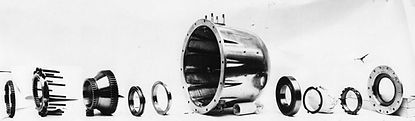
Armstrong Siddeley Tiger Aero-Engine Exploded Views

AW 16 Credit Flight International 10441S

AW 23 Credit World War Photos
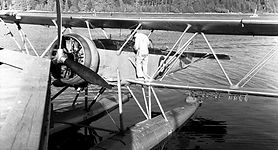
Blackburn Shark with Tiger Engine
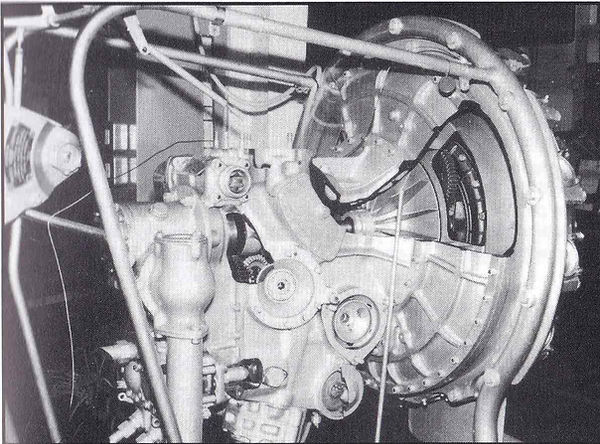
This image shows a sectioned Armstrong Siddeley Two Speed Supercharger fitted to the Tiger MK VIII. The two supercharger speeds could be selected by the pilot as follows:
A LOW setting gave a moderate supercharged effect.
A HIGH setting gave a supercharged effect, maintaining ground-level air intake pressure to the engine up to 15,000 ft.